
What Are Dental Crowns?
Dental crowns are custom-made caps placed over damaged, weakened, or severely decayed teeth. They restore a tooth’s shape, size, strength, and appearance while providing protection against further damage. Crowns may also be recommended after root canal treatment or to restore a dental implant. Depending on your needs, your dentist may recommend porcelain, zirconia, or another restorative material.What Are Porcelain Dental Crowns?
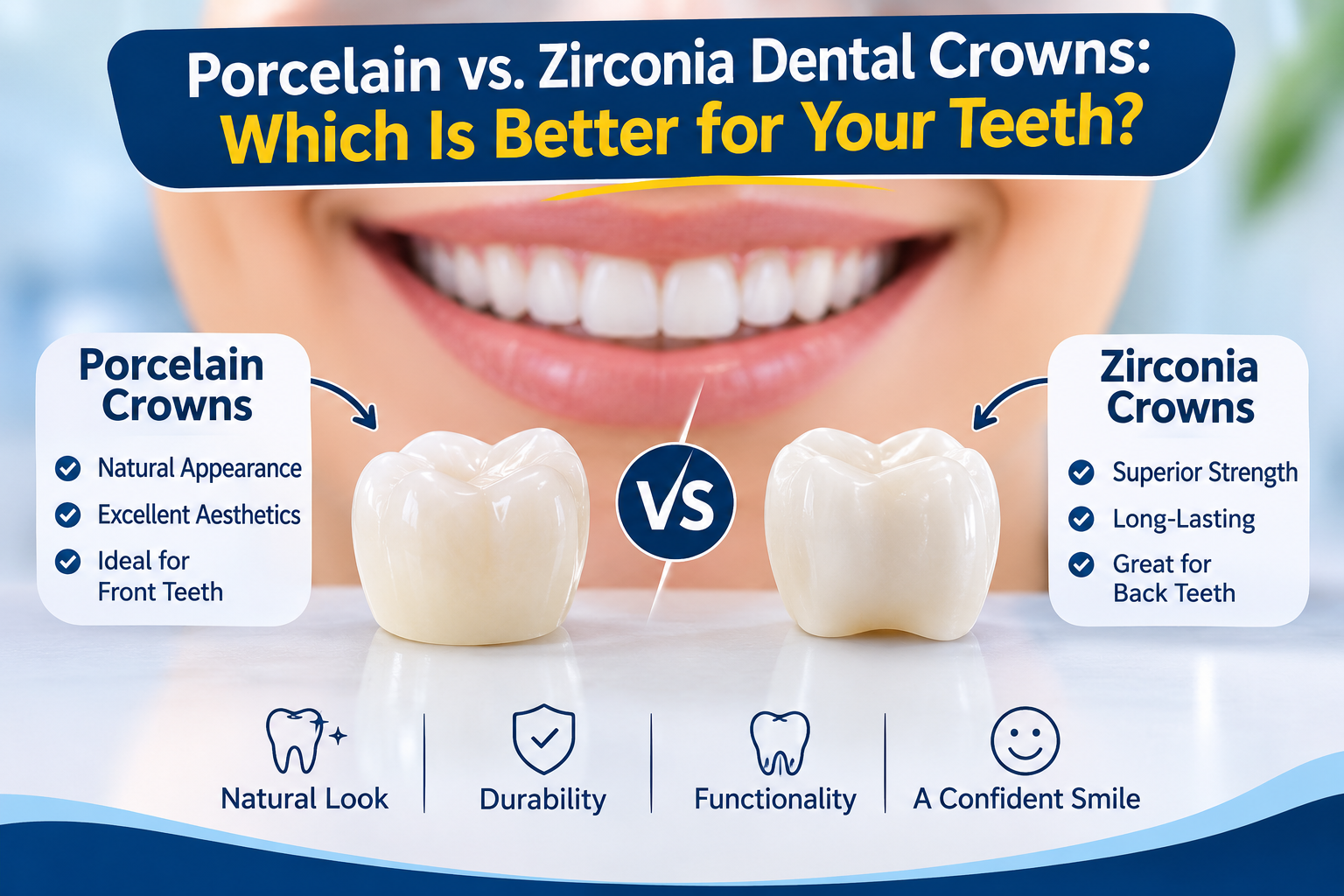
Porcelain dental crowns are known for their natural-looking appearance. They closely resemble natural tooth enamel and reflect light in a way that creates an attractive, realistic smile. Benefits include:- Natural-looking color and translucency.
- Excellent aesthetic results for visible teeth.
- Ability to blend with surrounding natural teeth.
- A popular option for cosmetic dental crowns.
What Are Zirconia Dental Crowns?
Zirconia crowns are made from zirconium dioxide, a strong ceramic material known for its durability and resistance to wear. They are commonly recommended for teeth that experience significant chewing pressure. Benefits include:- Excellent strength and durability.
- Resistance to chipping and cracking.
- Natural-looking options with modern zirconia materials.
- Suitable for both front and back teeth, depending on the case.
Porcelain vs. Zirconia Crowns: Key Differences
Both materials offer advantages, but they serve different priorities.| Feature | Porcelain Crowns | Zirconia Crowns |
| Appearance | Highly natural and translucent | Natural-looking, with varying translucency |
| Strength | Depends on porcelain type | Generally very strong |
| Durability | May chip under heavy pressure | Excellent resistance to fracture |
| Best suited for | Aesthetic restorations | Strength and function |
| Placement | Often front teeth | Front and back teeth |
Appearance and Natural-Looking Results
Porcelain crowns are traditionally preferred for front teeth because of their ability to mimic natural enamel. Zirconia crowns can also provide attractive results, especially newer translucent varieties. Your dentist will consider the shade, tooth position, and surrounding teeth when recommending a material.Strength and Durability
Zirconia generally offers greater resistance to fracture than traditional porcelain. This makes it a strong choice for molars and patients who put significant pressure on their teeth. Porcelain can still provide reliable results when the appropriate material is selected and the crown is properly maintained.Comfort and Functionality
Both materials can restore comfortable chewing and normal tooth function when properly designed and fitted. The dentist must ensure the crown has the correct bite alignment to avoid unnecessary pressure on surrounding teeth.Which Crown Material Is Better for Front Teeth?
For front teeth, appearance is often the main priority. Porcelain crowns are an excellent choice because of their natural translucency and ability to blend with nearby teeth. However, highly aesthetic zirconia options may also be suitable.Which Crown Material Is Suitable for Back Teeth?
Back teeth handle greater chewing forces, making strength especially important. Zirconia is often recommended for molars because of its durability and resistance to cracking. Your dentist will assess your bite and individual dental condition before making a recommendation.Factors Dentists Consider When Recommending Crown Materials
When determining the best material for dental crowns, dentists consider several factors, including:- Tooth location: Front teeth require more attention to aesthetics, while molars need greater strength.
- Bite pressure: Heavy biting forces may influence material selection.
- Cosmetic goals: Your preferred smile appearance matters.
- Oral health: Existing tooth damage and surrounding gum health are important.
- Personal preferences: Budget, lifestyle, and treatment expectations may affect the decision.
How to Choose the Right Dental Crown
The right crown depends on your individual dental needs rather than one material being better for everyone. If you prioritize natural aesthetics, porcelain may be appropriate. If strength and long-term resistance to wear are your priorities, zirconia may be a better fit. Consulting an experienced dental professional can help you compare your options and select a crown that supports both oral health and appearance. If you are considering porcelain dental crowns in Orange, CA, Michelsen Dental can help you explore suitable restorative and cosmetic treatment options. Schedule a consultation to discuss which crown material is right for your smile.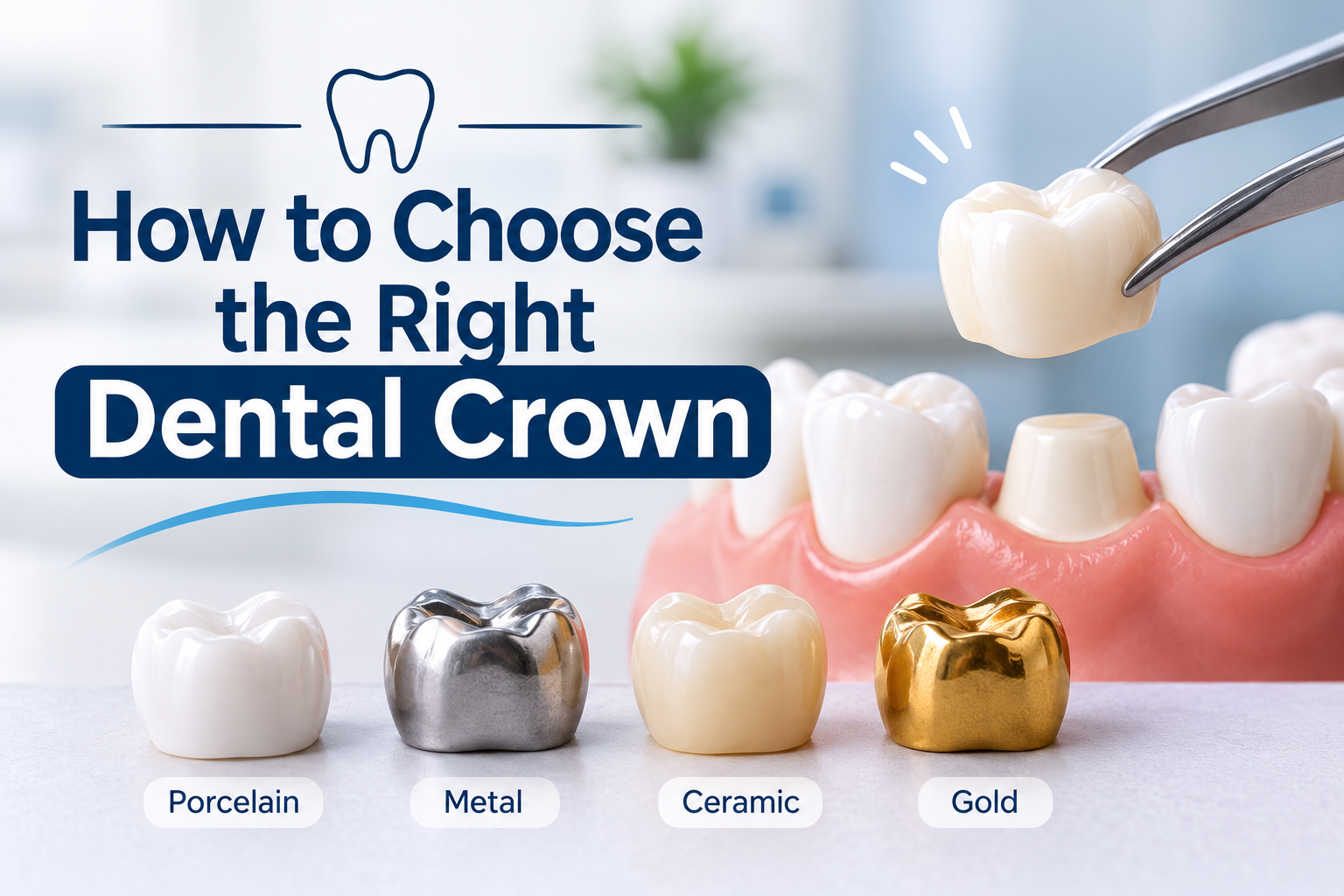

 Request